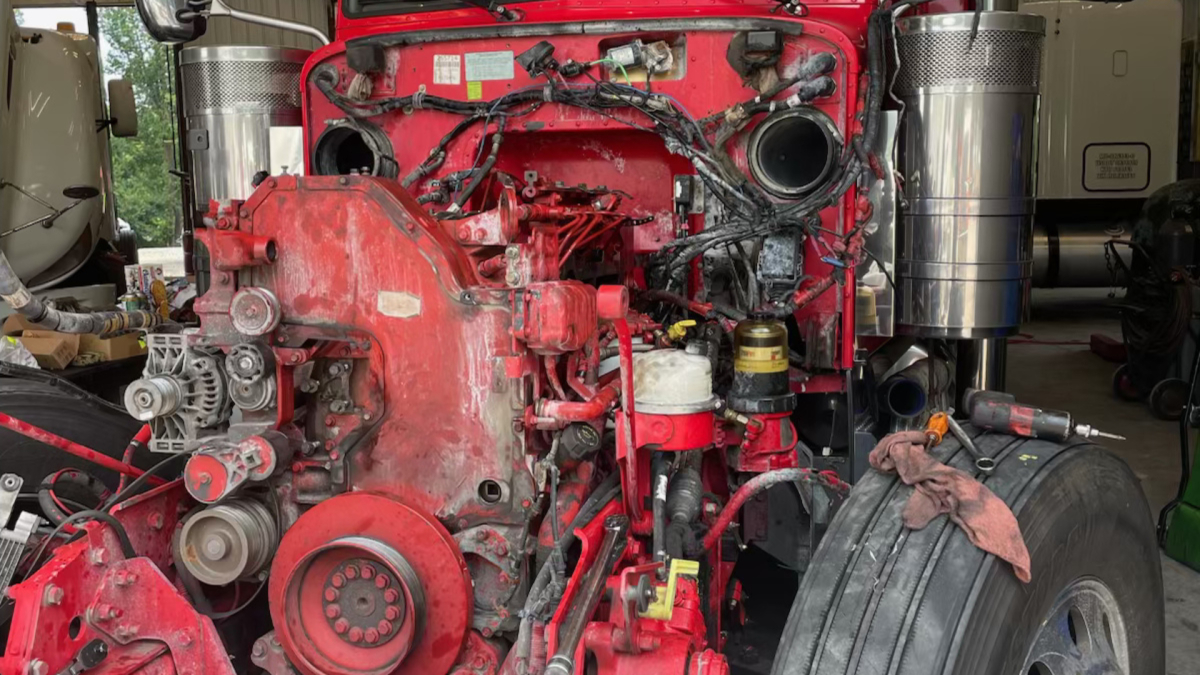
A DEF or SCR system fault can progress from a dashboard warning to a full engine shutdown faster than most drivers expect. When that warning light appears on I-77, you do not have the luxury of waiting until morning to find a dealer with an opening. Reid Diesel Enterprises responds to aftertreatment emergencies along the I-77 and US-421 corridors with OEM diagnostic software and the equipment to perform forced regens and DEF system repairs directly at your breakdown location.
Call (336) 468-2323 any time. We are located at I-77 & 421 Exit 272 or 267 in North Wilkesboro, NC.
Understanding DEF and SCR System Failures
Every diesel truck built after 2010 is equipped with a Selective Catalytic Reduction system. The SCR system uses Diesel Exhaust Fluid, a solution of urea and water, to reduce nitrogen oxide emissions from the exhaust. The DEF is injected into the exhaust stream, where it reacts with the SCR catalyst to convert harmful NOx into nitrogen and water.
When any part of that system fails, the truck's ECM interprets it as an emissions compliance issue and begins a derate sequence. In the worst-case scenario, the engine is limited to 5 mph or shut down entirely until the fault is resolved. The frustrating reality is that most derate events are caused by component failures rather than driver error. Sensors fail, injectors clog, and heated DEF lines develop faults over time, all of which the system treats as a compliance problem until a technician diagnoses and clears the root cause.
Common DEF and Aftertreatment Failures We Respond To
Truck in Derate Mode
Derate mode is the most common aftertreatment emergency we respond to on I-77. The ECM limits engine power or speed to force the driver to address an emissions-related fault, and the restriction escalates if the fault goes unresolved. Causes include:
- Low or empty DEF tank
- Contaminated or off-spec DEF fluid
- Failed DEF pump or dosing injector
- NOx sensor faults
- Frozen DEF lines in cold weather
- SCR catalyst issues
Derate typically progresses in stages, giving you some time to find a safe location before the restriction becomes severe. When the warning first appears, note your exact location and the messages displayed on your dash, then call us immediately.
DEF Quality Sensor Faults
DEF is a precise formulation of 32.5% urea and 67.5% deionized water. Off-spec fluid from contamination, improper storage, or a low-quality supplier triggers the quality sensor and initiates a derate, even if the tank is completely full. A faulty quality sensor can also produce false readings when the fluid itself is within spec. Either way, the truck responds identically. Our technicians can test DEF quality on-site, flush the system if needed, and clear fault codes once the root cause is confirmed.
DEF System Frozen in Cold Weather
The Fancy Gap section of I-77 sits above 2,800 feet elevation, where winter temperatures regularly drop well below freezing. DEF freezes at 12 degrees Fahrenheit, and the mountain section of the corridor sees temperatures that reach that threshold regularly in winter months.
Modern trucks are designed with heated DEF tanks and lines, but those heating elements and hoses fail over time. A frozen or partially frozen DEF system triggers fault codes that can send a truck into derate on the mountain grade, which is one of the worst places on the corridor to lose engine power. Keeping your DEF tank at least half full helps, since fuller tanks resist freezing better due to thermal mass.
SCR System and Injector Faults
The DEF dosing injector sprays precise amounts of DEF into the exhaust stream. When it clogs, fails electrically, or crystallizes from interrupted flow, the SCR system loses its ability to process NOx and the ECM initiates a derate. NOx sensor failures produce similar symptoms, since a faulty sensor reading too much NOx triggers the same response even when actual emissions are within spec. Distinguishing between these causes requires OEM diagnostic software, not a generic code reader.
Forced Regen Required
When active regeneration fails to complete and the DPF reaches a critical soot level, a forced regeneration performed by a technician with OEM software is the only solution. At critical overfill, the ECM may prevent restart entirely to protect the engine. A standard active regen attempt will not resolve the situation at this stage. Reid Diesel's Specialized Services include mobile forced regeneration and full aftertreatment diagnostics performed at your location.
Reid Diesel's Mobile DEF and SCR Response
Our mobile units carry OEM diagnostic software for all major engine platforms, including Cummins INSITE, Detroit Diagnostic Link, and PACCAR diagnostic tools. At your breakdown location, we can:
- Read and interpret fault codes from the ECM and aftertreatment control module
- Assess live NOx sensor and DEF system data
- Test DEF fluid quality on-site
- Perform forced regenerations
- Replace common DEF system components including dosing injectors and sensors
Every repair includes complete documentation of fault codes, work performed, and parts used. Fleet managers and dispatchers receive this information in a format that supports reimbursement claims and carrier authorization requirements.
Visit our Fleet Services page for information on how Reid Diesel supports fleet operators along the I-77 corridor.
What to Do When Your Truck Goes Into Derate
Acting quickly gives our technician the best chance of resolving the issue at your location rather than requiring a tow.
- Note the exact warning messages on your dashboard, including any fault codes displayed.
- Identify your location: direction of travel, nearest mile marker or exit number, and any visible landmark.
- If the derate allows continued movement, get to the next safe pull-off or truck stop before stopping.
- Do not shut the engine off unless the warning specifically instructs you to stop immediately.
- Call Reid Diesel at (336) 468-2323 with your location and a description of the warnings displayed.
Payment and Fleet Card Information
Reid Diesel accepts Comdata, EFS, T-Chek, all major credit cards, Zelle, and direct fleet account billing for qualified carriers. We provide complete repair documentation for all aftertreatment work, including fault codes, parts replaced, and forced regen records for your maintenance files.
Frequently Asked Questions
What does a derate mean and how serious is it?
A derate is the ECM limiting engine power or speed to force the driver to address an emissions-related fault. Early derates may only affect top speed, but the restriction escalates if the fault is not resolved. In the most severe cases, the truck reduces to 5 mph or refuses to restart. Any derate warning should be taken seriously and investigated promptly.
Can you perform a forced regen on the roadside?
Yes. Our mobile units carry the OEM diagnostic software required to initiate and monitor a forced regen at your location. The process typically takes 30 to 60 minutes and requires the truck to be stationary with the engine running in a safe, ventilated area away from traffic.
My DEF looks fine. Why is the sensor triggering a fault?
DEF quality cannot be assessed visually. Contamination, improper urea concentration, and age-related degradation all look identical to properly spec'd fluid. A refractometer or professional diagnostic system is required to confirm DEF quality. A faulty quality sensor can also produce false readings even when the fluid itself is within spec.
Will my truck shut down completely from a DEF failure?
It depends on the severity and the manufacturer's programming. Most trucks progress through derate stages before a full shutdown, giving you time to respond. However, if fault codes have been active for an extended period or the system has reached a critical threshold, a full shutdown or no-restart condition is possible. Do not ignore early derate warnings.
How do I prevent DEF system issues in winter on I-77's mountain grades?
Keep your DEF tank at least half full, since fuller tanks resist freezing better. Have your DEF heating elements and lines inspected before winter. Use DEF from reputable suppliers and store it properly, since DEF degrades in heat and sunlight. If you regularly run the Fancy Gap section in winter, a pre-season DEF system inspection is a worthwhile investment.
Get Help Now
DEF and SCR failures move quickly from inconvenience to crisis. Reid Diesel Enterprises responds 24 hours a day, 7 days a week, with real people answering the phone and mobile units ready to dispatch.
Call (336) 468-2323 or reach us through our contact page.
Reid Diesel Enterprises 967 Chambers Rd, North Wilkesboro, NC 28659
I-77 & 421 Exit 272 or 267