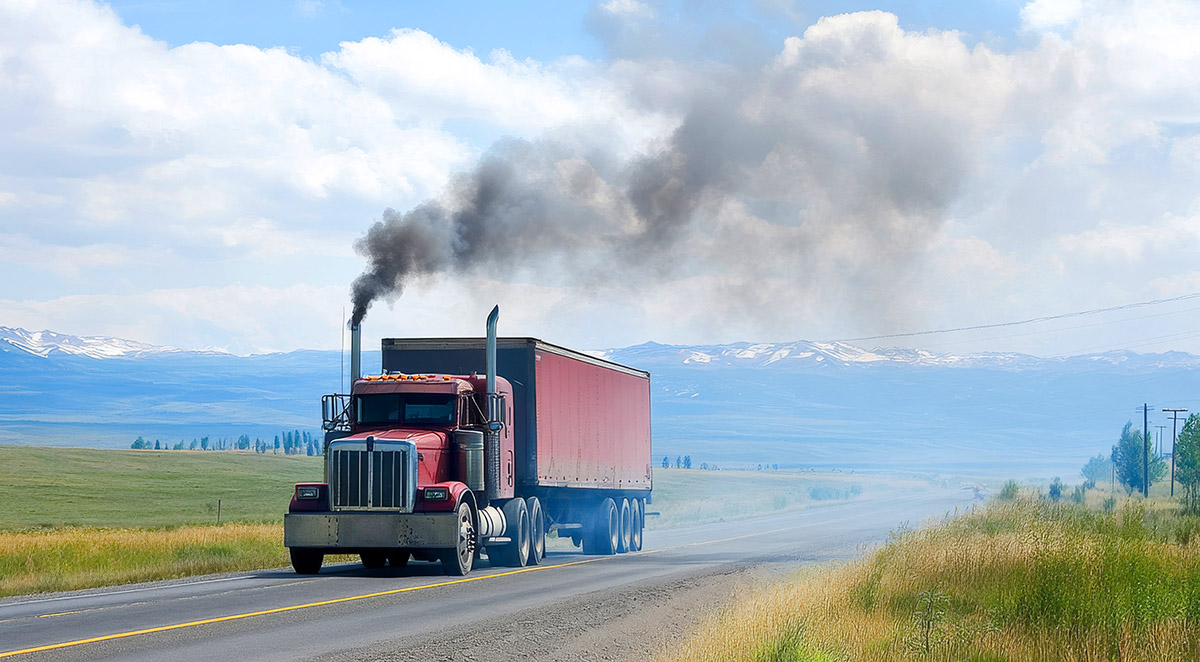
Modern diesel trucks are marvels of engineering, but their emissions systems rank among the most misunderstood sources of unexpected breakdowns. A warning light flickering on your dash doesn't necessarily signal catastrophic failure, but understanding what it means and how quickly to act can be the difference between a quick roadside forced regen and a full engine derate on a mountain grade with a load aboard.
Whether you're hauling through the Blue Ridge on I-77 or navigating the US-421 corridor, emissions-related breakdowns happen without warning and escalate fast. Reid Diesel Enterprises has helped countless drivers and fleet managers decode those warning lights and get back on the road, and this guide covers everything you need to know before the next warning light appears.
Quick Summary
- Modern truck emissions systems rely on four key components: DPF, DOC, SCR, and the DEF system
- Warning lights escalate in stages, and waiting on each stage costs significantly more than acting early
- Forced regeneration often resolves DPF issues when performed before full clog
- DEF system faults are among the most common causes of derate and full shutdown
- Reid Diesel provides mobile emissions diagnostics and forced regen along the I-77 and US-421 corridors
- Call us 24/7 at (336) 468-2323 the moment a warning light appears
How Your Truck's Emissions System Actually Works
Understanding the basics of your emissions system helps you communicate accurately with dispatchers and technicians when something goes wrong. There are four primary components working in sequence to manage exhaust output, and each one can trigger a breakdown scenario when it fails.
Diesel Oxidation Catalyst (DOC)
The DOC is the first stage of the exhaust treatment process. It oxidizes carbon monoxide and unburned hydrocarbons, generating heat that downstream components depend on. If the DOC is compromised, the DPF will clog faster and regeneration cycles will become less effective.
Diesel Particulate Filter (DPF)
The DPF captures soot from the exhaust stream before it exits the tailpipe. Over time, that soot accumulates and must be burned off through a process called regeneration. When regen fails to complete or happens too infrequently, the DPF clogs and triggers a cascade of warning lights and eventually a derate.
Selective Catalytic Reduction (SCR) System
The SCR system uses Diesel Exhaust Fluid to chemically convert nitrogen oxides into harmless nitrogen and water vapor. This system depends entirely on the quality and availability of DEF.
DEF System
The DEF system includes the tank, pump, dosing injector, and quality sensor. Any one of these components can fail independently and set off a derate or full shutdown, which is why DEF-related faults must be taken seriously the moment they appear.
Warning Signs You Can't Ignore
DPF Warning Lights and What They Mean
Most trucks use a two-stage warning system for DPF issues. An amber DPF warning light indicates that soot levels are elevated and an active regeneration is needed. At this stage, the fix is often straightforward: get on the highway at sustained speeds to allow a passive regen to complete, or perform a parked regen if conditions allow. This is the stage where action is cheap.
A red DPF warning is a more urgent signal, indicating that soot accumulation has reached a critical level and active intervention is required. At this stage, continuing to drive without action risks engine derate. In many trucks, the engine will enter a reduced-power mode that limits speed to 55 mph or less. This is when the repair window is narrowing quickly.
DEF System Alerts
DEF-related alerts are among the most common emissions warnings on modern trucks, and they escalate faster than most drivers expect. A low DEF level warning gives you a manageable window to refuel, but a DEF quality warning is more serious. Contaminated DEF, which can result from improper storage, water intrusion, or using the wrong fluid, will trigger the quality sensor and initiate a derate countdown. Once that countdown reaches zero, many trucks will limit speed to 5 mph or less.
Dosing injector faults and DEF pump failures require a technician. These components are more prone to failure in extreme temperatures, which makes the I-77 mountain corridor particularly unforgiving during winter and early spring.
Derate Symptoms
A derate is your truck's built-in enforcement mechanism for unresolved emissions issues. Stage one derate typically limits speed to 55 mph. Stage two reduces power further, sometimes to 65% of normal output. A full shutdown derate, common with extended DEF system failures, can limit speed to a crawl or prevent the engine from restarting once it's been shut off.
Recognizing derate symptoms early, such as a noticeable loss of power climbing a grade, the inability to maintain highway speed, or an engine that feels sluggish under load, gives you time to call for help before the situation becomes a full roadside stop. On I-77's mountain sections, catching this early is especially important.
Forced Regeneration: What It Is and When It Fails
Regeneration is the process of burning accumulated soot out of the DPF. There are three types: passive, active, and forced.
Passive and Active Regen
Passive regen happens automatically at highway speeds when exhaust temperatures are high enough. Active regen is triggered by the ECM when soot levels reach a set threshold, using extra fuel to raise exhaust temps. Both should occur without driver involvement under normal operating conditions, and both depend on the truck being driven under sufficient load and speed to generate the necessary heat.
Forced Regen
Forced regen, sometimes called a parked regen or stationary regen, is initiated manually when the DPF is too clogged for active regen to complete on its own. It requires the truck to be parked and idling for 20 to 45 minutes while the system works through the accumulated soot. This is a legitimate repair tool, not a workaround, and when performed at the right stage, it resolves the issue completely.
Forced regens fail or become impossible when the DPF is too far gone for heat alone to clean it. At that point, the filter must be removed and professionally cleaned with specialized equipment, or replaced entirely. This is precisely why acting on an amber warning is so much less expensive than waiting for a red light or a full derate: earlier intervention means simpler and cheaper resolution.
Mountain corridor driving is particularly hard on DPF systems. Short runs, extended idling at grades, and the sustained load demands of climbing steep terrain all interfere with passive regen cycles. Trucks running the Fancy Gap mountain section of I-77 or the grade near Deep Gap on US-421 are especially prone to DPF problems. Our mobile specialized services include roadside forced regeneration, meaning a technician comes to your location with the diagnostic equipment to initiate and monitor a forced regen without towing.
DEF System Troubleshooting on the Road
DEF problems are frustrating because they often appear suddenly and escalate quickly once they start. Knowing what a driver can reasonably check versus what requires a technician saves time and prevents costly mistakes.
What a Driver Can Check Before Calling
- DEF tank level (low fluid is the simplest fix, and often the only one needed)
- DEF quality (use only API-certified fluid from reputable, sealed containers)
- Visible damage to the DEF tank cap or accessible lines
What Requires a Technician
- DEF quality sensor faults that persist after refilling with fresh, certified DEF
- Dosing injector failures (often indicated by rough idle or unusual exhaust quality)
- DEF pump failures, which are typically silent until the system stops dosing entirely
- Frozen DEF lines, common in temperatures below 12°F, which require careful thawing with proper equipment
One of the most common and costly roadside mistakes is adding fresh DEF on top of contaminated fluid and hoping the sensor clears on its own. In most cases, the tank must be drained and flushed before the quality sensor will reset. Clearing fault codes without addressing the contamination will restart the derate countdown regardless.
When to Call for Emergency Emissions Repair
The decision to call for help should be driven by the stage of your warning system, not by how much farther you believe you can push through to a shop. Here is a practical decision framework.
Call Immediately If
- Your red DPF warning is active and a parked regen has not completed or is not possible
- Your truck has entered any stage of derate
- DEF quality or dosing faults are active and a derate countdown has begun
- A check engine light is accompanied by any active emissions system warning
- You are approaching or already on a mountain grade with an amber DPF light already active
Monitor Closely and Act Within the Hour If
- An amber DPF warning has appeared and you cannot safely complete a highway speed passive regen
- DEF level is critically low and you are not within range of a fuel stop
Waiting through a stage one derate hoping to reach a distant shop rarely ends well. The cost difference between a roadside forced regen and a shop-based DPF cleaning is significant. The cost difference between a DPF cleaning and a full DPF replacement is greater still. Early action is always the better financial decision.
For 24/7 emergency roadside assistance anywhere along the I-77 and US-421 corridors, call Reid Diesel at (336) 468-2323. Our technicians carry the tools to read fault codes, assess soot levels, and initiate forced regens at your location.
Reid Diesel's Mobile Emissions Services
Reid Diesel Enterprises provides a full range of mobile emissions diagnostics and repair from our base at I-77 Exit 270 in North Wilkesboro, NC. Our ASE-certified technicians respond to breakdown locations throughout the I-77 corridor from Statesville to the Virginia border, and along US-421 from Winston-Salem to Boone.
Our mobile emissions services include OEM-level diagnostic scanning for all major truck brands, roadside DPF soot level assessment, mobile forced regeneration at your location, DEF system diagnosis and component repair, dosing injector service, SCR system troubleshooting, and DPF removal and cleaning coordination when roadside regen is not sufficient. We understand that emissions breakdowns often happen at the worst possible moments, on grades, in cold weather, and miles from the nearest qualified shop. Our goal is always to come to you, assess the situation honestly, and get you back on the road as quickly as the repair allows.
Frequently Asked Questions
Can a forced regen be performed at my breakdown location?
Yes. Our mobile service trucks carry the diagnostic equipment needed to initiate and monitor a forced regeneration at your location. The process typically takes 20 to 45 minutes and requires the truck to remain stationary and idling. Our technician will assess your DPF soot level before beginning to confirm a forced regen will be effective at your current stage.
How do I know if my DPF needs cleaning versus full replacement?
Soot and ash accumulation are the two key factors. Soot can be burned off through a forced regen or professional cleaning. Ash accumulates permanently over time and requires professional cleaning with specialized equipment to remove. If the DPF has been overloaded repeatedly or has sustained physical damage, replacement may be the more cost-effective long-term option. Our technicians will give you an honest assessment before recommending either.
What causes DEF to become contaminated?
The most common causes are using non-API-certified DEF from unreliable suppliers, water or fuel contamination during refueling, and improper storage in containers that previously held other fluids. Fresh, uncontaminated DEF should be a clear, colorless liquid with a faint ammonia smell. Discoloration or an unusual odor are reliable signs of contamination that will trigger the quality sensor.
Will clearing fault codes fix my emissions derate?
Clearing codes without addressing the underlying issue provides only temporary relief. The ECM will re-trigger the derate once it detects the same fault condition again, often within a few miles. Proper diagnosis and repair of the root cause is the only lasting solution. Our technicians identify and resolve the underlying issue, not just clear the codes.
How long does it take to fix an emissions problem roadside?
This depends on the specific failure. A DEF refill takes minutes. A forced regen typically takes 20 to 45 minutes once initiated. DEF sensor or dosing injector replacement can take one to three hours depending on parts availability. Our technicians will give you a realistic completion estimate before beginning any work, and we communicate directly with dispatchers when authorization is needed.
Does Reid Diesel accept fleet cards for emissions repairs?
Yes. We accept Comdata, EFS, T-Chek, and all major credit cards. We also provide complete repair documentation for dispatcher and fleet manager approval, including itemized parts and labor, technician notes, and location information.
Conclusion
Emissions systems have become one of the most common sources of unexpected commercial truck breakdowns, and as regulations tighten, these systems will only grow more complex. The encouraging reality is that most emissions-related breakdowns are manageable when recognized early. Understanding your warning lights, knowing when to act, and having a reliable technician available at any hour makes a significant difference in how quickly you get back on the road and how much that breakdown ultimately costs.
Reid Diesel Enterprises is available 24 hours a day, 7 days a week to handle emissions emergencies along the I-77 and US-421 corridors. Contact us online or call (336) 468-2323 the moment a warning light appears. Our technicians will come to you, assess the situation honestly, and get you moving again.